March 29, 2026
Desie Kasew Assefa at Asia-Pacific Biofilms 2026
Accepted abstract title
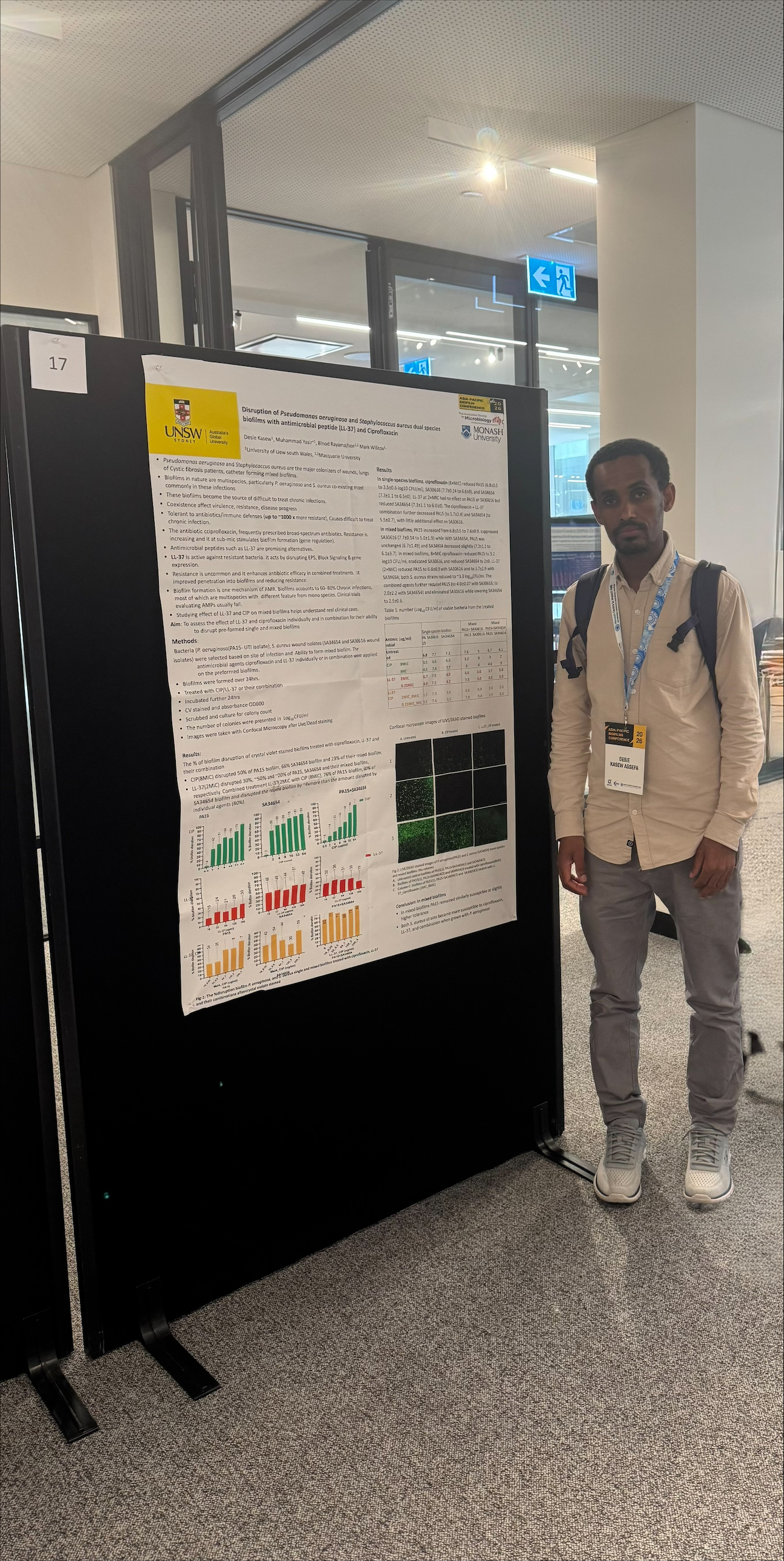
Disruption of P. aeruginosa and S. aureus dual species biofilms with antimicrobial peptide (LL-37) and ciprofloxacin.
A brief description of the poster
Our research focused on how Pseudomonas aeruginosa (P. aeruginosa) and Staphylococcus aureus (S. aureus) interact within biofilms, and how these interactions influence their susceptibility to antibiotics and antimicrobial peptides. We examined the effects of the human cathelicidin peptide LL-37, antibiotic ciprofloxacin, and their combination on mono-species and mixed-species biofilms.
Biofilm disruption was assessed by measuring total biomass using crystal violet staining, determining viable bacterial counts following mechanical disruption and growth on selective media, and visualizing the viable and dead bacteria as well as the biofilm structure using confocal microscopy with Live/Dead staining.
In mixed-species biofilms, P. aeruginosa suppressed the growth of S. aureus while maintaining similar or slightly increasing its own population. P. aeruginosa exhibited increased tolerance, while S. aureus showed reduced viability. Notably, S. aureus was more susceptible to antimicrobial treatments when grown in the mixed biofilm with P. aeruginosa compared to mono-species biofilms. The combination of ciprofloxacin and LL-37 was more effective than either treatment alone, resulting in enhanced bacterial killing within the biofilm.
A short reflection on your conference experience
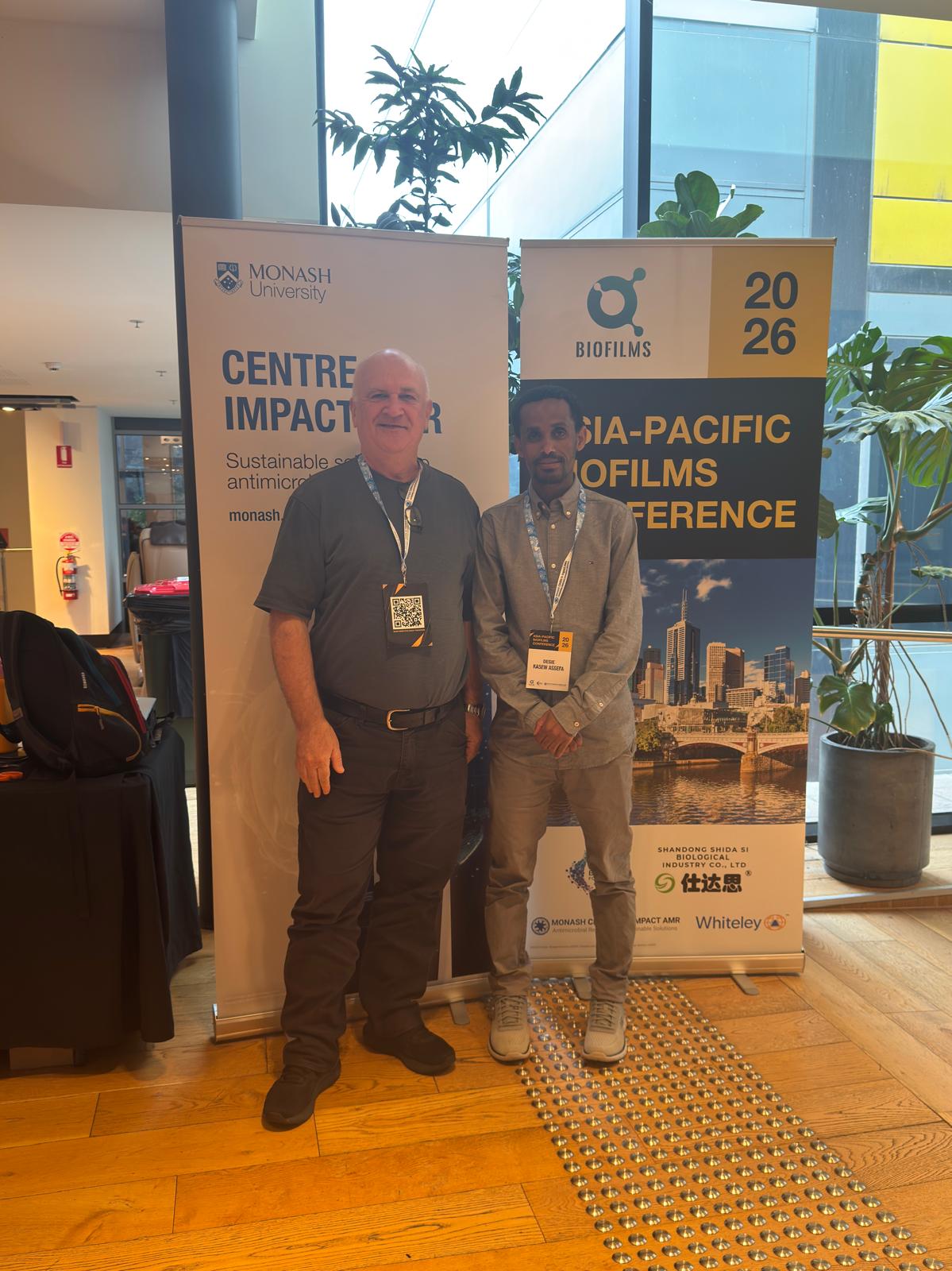
The conference was valuable and engaging. It brought together a diverse group of professionals (mainly microbiologists) who shared insightful ideas, recent developments in biofilm research, and antibiofilm agents. The conference provided opportunity to learn from others’ experiences and to connect with peers and scientists from across the world. Overall, the conference was informative and inspiring, offering both knowledge and motivation in the field.